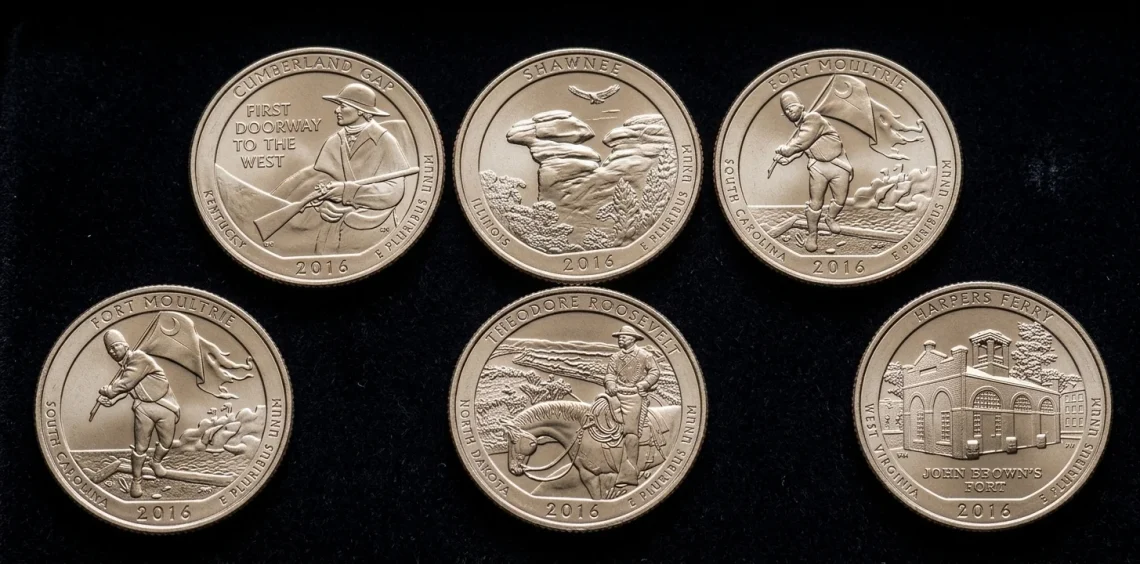
The 2016 quarter value is not one number. The year includes five different America the Beautiful designs, several mint marks, and more than one collector format. That is why one 2016 quarter can be worth face value, while another can sell for several dollars or more. The first step is simple: identify the design, then the mint mark, then the type of coin. With all these steps, you can quickly manage thanks to a free coin identifier. After that, the value starts to make sense.
The Five 2016 Designs
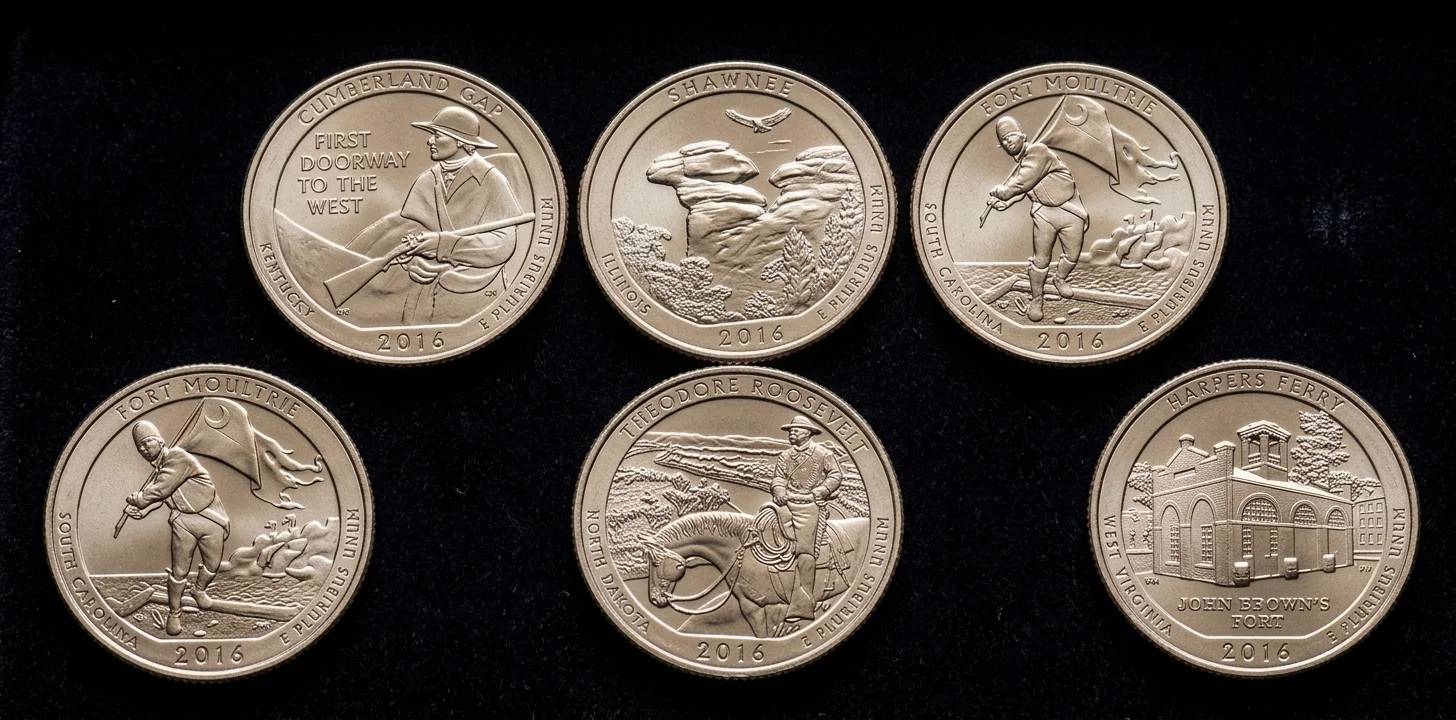
The reverse designs of the year are easy to separate. Each one represents a different site.
| Design | Site | State |
| Shawnee | Shawnee National Forest | Illinois |
| Cumberland Gap | Cumberland Gap National Historical Park | Kentucky |
| Harpers Ferry | Harpers Ferry National Historical Park | West Virginia |
| Theodore Roosevelt | Theodore Roosevelt National Park | North Dakota |
| Fort Moultrie | Fort Moultrie at Fort Sumter National Monument | South Carolina |
These five reverses give the year its structure. They also explain why collectors often build 2016 as a full set rather than chase one coin by itself.
What Versions Exist
This is where the year becomes more technical. A 2016 quarter can belong to one of several categories.
| Version | Mint mark | Type | Basic collector role |
| Business strike | P | Circulation | Basic set building |
| Business strike | D | Circulation | Basic set building |
| Clad proof | S | Proof | Collector issue |
| Silver proof | S | Proof | Collector silver issue |
| Uncirculated collector strike | S | Uncirculated | Expanded modern set |
That distinction matters. A circulation coin, a clad proof, and a silver proof do not belong in the same value bracket. The San Francisco proof set was sold as a collector product, and the 2016 silver proof set used 90% silver coins.
Basic Technical Differences
The ordinary P and D quarters use the normal clad format. The silver proofs are different in both composition and weight.
| Type | Composition | Weight | Edge |
| Clad circulation and clad proof | Copper-nickel over copper core | 5.67 g | Copper stripe visible |
| Silver proof | 90% silver, 10% copper | 6.25 g | No copper stripe |
This is a useful identification shortcut. If the edge shows a copper stripe, the coin is clad. If the edge looks solid silver in color and the coin came from a proof context, it may be the silver version.
Why Most 2016 Quarters Are Not Expensive
The date is modern, and the mintages are large. That keeps ordinary circulation coins common. The Philadelphia and Denver totals run into the hundreds of millions for each design.
Harpers Ferry alone exceeded 434 million in Philadelphia and 424 million in Denver. Even the smaller circulation designs still had very large outputs. That is why most worn 2016 quarters remain low-value coins.
NGC notes that a 2016 national park quarter in circulated condition is worth about $0.30 to $0.40 as of March 2026. That gives a useful baseline. If a 2016 quarter has ordinary wear and no special format, the market usually stays close to face value.
Circulated Value: The Entry Level
For regular P and D quarters from change, the value is usually simple. Most circulated coins stay in the face-value area, with only a small premium at best. The reason is supply. Too many coins survive. Too many remain easy to find. The year is collectible, but not scarce in normal wear.
This point matters because many modern collectors overestimate recent quarters. A national site design and a modern date do not create rarity by themselves. A circulated 2016 quarter is usually a set coin, not a premium coin.
| Grade range | Approximate value |
| AG–VG | $0.25 |
| F–VF | $0.25–$0.35 |
| XF–AU | $0.30–$0.40 |
These are working ranges for ordinary circulated P and D coins. Final prices stay modest unless the coin is unusually clean, part of a matched set, or tied to a confirmed mint error.
Uncirculated and Mint State Coins
The market changes when the coin is unworn. USA Coin Book gives examples such as 2016-P Shawnee and 2016-D Theodore Roosevelt at about $0.61 to $1.24 or more in uncirculated Mint State condition. That shows the next step in the market. Raw, uncirculated coins do carry more value than worn pieces, but they still remain affordable in most cases.
This is the normal pattern for modern quarters. The first premium comes from a clean, unworn example. A stronger premium comes later, when the coin reaches better certified grades. That part of the market is much narrower. Most modern quarters are common in lower Mint State. The best preserved pieces are the ones that separate.
| Grade range | Approximate value |
| MS60–MS63 | $0.60–$1.25 |
| MS64–MS66 | $1.25–$5+ |
| MS67 | $10–$50+ |
| MS68 | $90–$200+ |
| Elite auction outliers | much higher |
These figures are practical market ranges, not fixed prices. Modern quarters stay cheap in the lower Mint State. The real separation begins in the top certified grades, where population pressure and eye appeal matter much more.
Proofs: a Different Market
The San Francisco clad proofs should not be mixed with P and D circulation coins. These coins were made for collectors. They have mirrored fields and frosted devices. They were sold in proof sets, so survival is much stronger than for circulation strikes. That is why they are nicer than most business strikes, but still not rare by absolute numbers. The proof mintage for each 2016 design was 654,516 coins.
A practical price example helps here: 2016-S Fort Moultrie clad proof at about $5.63 or more. That is a good working level for the clad proof part of the year. These coins are worth more than circulation quarters because they are collector products, but they are still accessible.
| Grade range | Approximate value |
| PR63–PR65 | $3–$6 |
| PR66–PR68 | $5–$10 |
| PR69 | $10–$20+ |
| Top certified pieces | higher, market-dependent |
These are approximate proof ranges for ordinary clad S proofs. Final value depends on haze, spots, mirrors, and whether the coin is raw or certified.
Silver Proofs: the Stronger Collector Version
The silver proofs form the most attractive standard premium tier for the year. They combine proof finish with 90% silver composition. The U.S. Mint sold them as a separate silver proof set, and the mintage for each design was 474,207. That is lower than the clad proof output, and the silver content gives them a built-in floor.
For example, the 2016-S Shawnee silver proof, 2016-S Theodore Roosevelt silver proof, and 2016-S Fort Moultrie silver proof at about $26 to $27 or more. This is the point where the year starts to feel more like a serious modern collector set than a simple circulation group.
| Grade range | Approximate value |
| PR65–PR68 | $23–$27+ |
| PR69 | $27–$35+ |
| PR70 / top certified | higher, market-dependent |
These are working ranges for silver proof quarters from the 2016 set. The silver content supports the floor, but surfaces, certification, and exact proof quality still decide the final price.
How Design Affects Value
The design matters, but not as much as many beginners assume. In circulated condition, one 2016 design usually does not outrun the others by a huge margin. The date is still too common overall. The real difference appears more in mintage structure, set-building preference, and upper-grade survival. Harpers Ferry had the highest P and D mintages. Fort Moultrie and Shawnee were lower. That can shape collector attention, but it does not turn the year into a rarity hunt.
This is a good place for a simple rule: design matters most when the coin is already in a stronger category. For common worn examples, it usually matters less. For better uncirculated coins, proofs, silver proofs, or matched sets, the design becomes part of the appeal again.
What Really Drives the Price
The price of a 2016 quarter usually depends on a small group of factors:
- The exact design
- The mint mark
- The issue type
- The grade
- Surface quality
- Silver content, if present
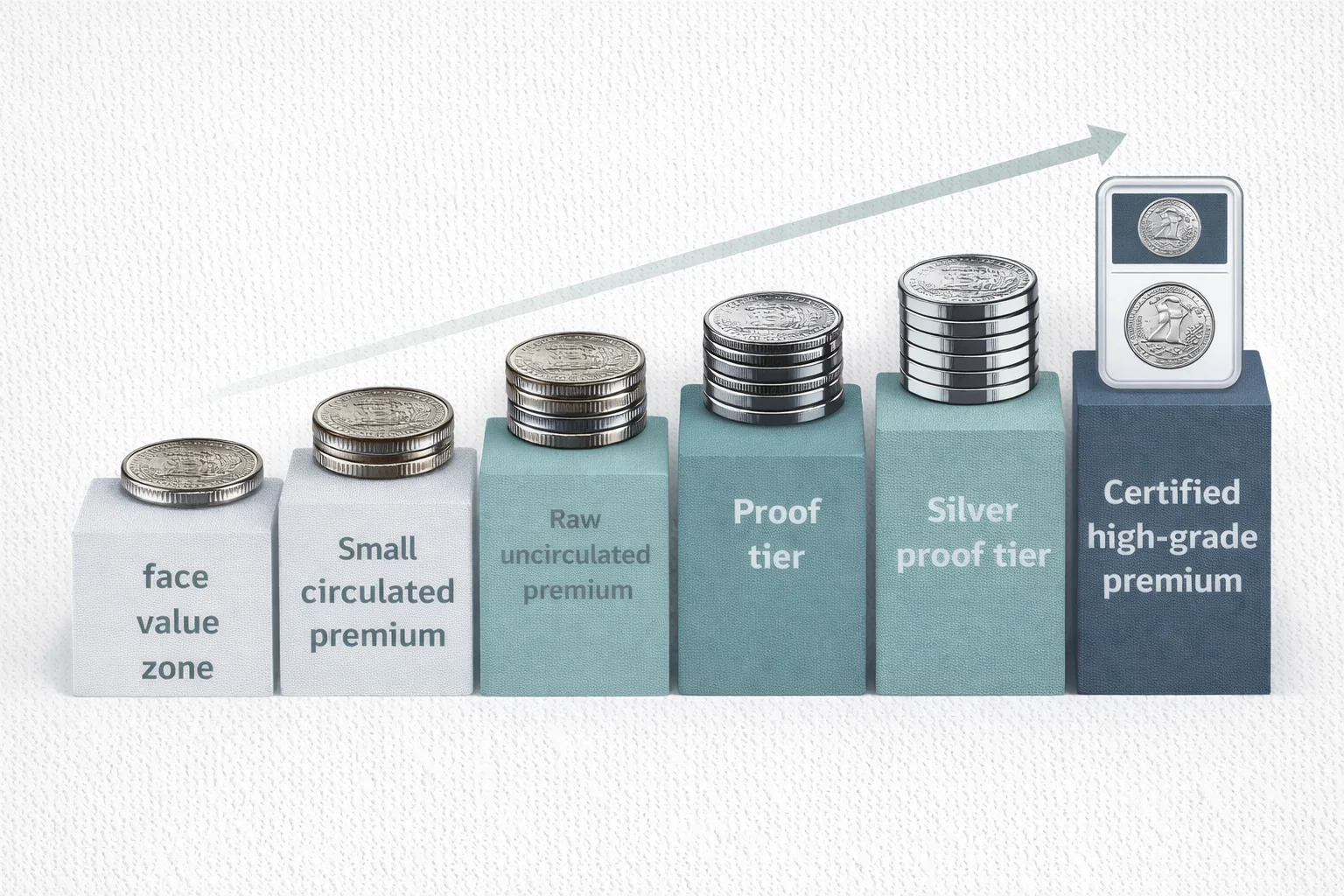
That is the working formula. A common design in worn condition stays cheap. A cleaner Mint State coin moves up. A clad proof rises further. A silver proof rises again. A top-grade certified coin can go much higher. Try the reliable coin finder app for the first sort of mixed modern lots, and check their final value. Coin ID Scanner also offers digital collection management and a virtual AI assistant that can help if you are a newcomer.
Which 2016 Quarter Suits Which Collector
Different versions suit different people.
- A beginner usually does well with a basic five-design group or a P and D set.
- A modern set builder may want all P and D business strikes plus the S uncirculated coins.
- A proof collector will often prefer the clad proof set.
- A collector who wants a stronger long-term floor may choose the silver proofs.
- A condition-focused buyer may look for especially clean certified P or D coins.
That is why the year remains useful. It does not offer one answer. It offers several collecting paths inside the same calendar year.
A Practical Way to Judge a 2016 Quarter
A simple order works best:
- Identify the design
- Check the mint mark
- Separate circulation, proof, silver proof, and S uncirculated issues
- Check the edge if silver is possible
- Judge the surfaces
- Estimate the grade
- Only then think about the price
This method helps because it matches the market. The market does not read the coin as “2016” and stop there. It reads the design, the format, the preservation, and the finish.
Final View
The 2016 quarter is widespread, not rare. That is the clearest summary. Most circulated pieces remain ordinary. Raw, uncirculated P and D coins usually stay modest. Clad proofs sit in a middle collector tier. Silver proofs are the strongest standard premium version because they add both proof quality and silver content. S uncirculated coins give the year another collector layer.
The real value still comes from the same things: the exact version, the surfaces, the grade, and whether the coin belongs in the common circulation tier or in the stronger proof and silver part of the 2016 set.